Filters
Loading...
Nature-based Solutions for Climate Resilient Cities: Perspectives and experiences from Latin America
Kozak, D., Winograd, M., Hardoy, J., Arellano, B., Maldonado, M., Wild, T., Baptista, M., & Giusti, M.
This publication examines the critical need for climate-resilient urban planning in Latin America and the Caribbean, where extreme weather events are increasing in frequency and intensity while urban populations continue …
Urban Lab Profile: Alliance for the Centre of Recife, Brazil
Lucas Turmena, Flávia Guerra, Altiere Freitas, Alejandra Ramos-Galvez, Simone Sandholz, Michael Roll, Isadora Freire, Millena Oliveira
The challenges and key achievements of an Urban Lab established with support from the Transformative Urban Coalitions (TUC) project in Comunidade do Pilar in Recife, Brazil, provide valuable lessons for …
Urban Lab Profile: León, Mexico
Andrea Ramírez, Sabrina González Barbosa, Flávia Guerra, Alejandra Ramos-Galvez, Simone Sandholz, Michael Roll, Mariana Campos-Sánchez, Ana Iris Enríquez-Alcaraz, Andrea Villasís-Escobedo, Óscar Jair Pozos-Espinosa
The challenges and key achievements of an Urban Lab established with support from the Transformative Urban Coalitions (TUC) project in León, Mexico, provide valuable lessons for sustaining ongoing activities, accelerating …
Urban Lab Profile: Alliance for the Residencial Edgar Gayoso, Teresina, Brazil
Flávia Guerra, Monique Menezes, Lucas Turmena, Alejandra Ramos-Galvez, Simone Sandholz, Michael Roll, Camila Alberti, Tátila Távora
The challenges and key achievements of an Urban Lab established with support from the Transformative Urban Coalitions (TUC) project in Residencial Edgar Gayoso in Teresina, Brazil, provide valuable lessons for …
Urban Lab Profile: Naucalpan, Mexico
Michael Roll, Marisol Romero Magallán, Andrea Ramírez, Flávia Guerra, Alejandra Ramos-Galvez, Simone Sandholz, Mariana Campos-Sánchez, Gorka Zubicaray, Óscar Jair Pozos-Espinosa, Andrea Villasís-Escobedo, Ana Iris Enríquez-Alcaraz
The challenges and key achievements of an Urban Lab established with support from the Transformative Urban Coalitions (TUC) project in Naucalpan, Mexico, provide valuable lessons for sustaining ongoing activities, accelerating …
Urban Lab Profile: Barrio 20, Buenos Aires, Argentina
Flávia Guerra, Julia Nesprias, Alejandra Ramos-Galvez, Lucas Turmena, Simone Sandholz, Michael Roll, Jorgelina Hardoy, Florencia Almansi, Macarena Ochagavía, Fernando Almansi
The challenges and key achievements of an Urban Lab established with support from the Transformative Urban Coalitions (TUC) project in Barrio 20 in Buenos Aires, Argentina, provide valuable lessons for …
Urban Labs Beyond Europe: The Formation and Contextualization of Experimental Climate Governance in Five Latin American Cities
Michael Roll, Florencia Almansi, Jorgelina Hardoy, Simone Gatti, Ariadne Samios, Lucas Turmena, Mariana Campos, Gorka Zubicaray
Urban lab scholarship has overlooked lab formation as a distinct process and is almost exclusively based on European cases. Therefore, little is known about the role of context conditions for …
Mindset shifts and sustainability transformation journeys across Urban Labs in Latin America
Flávia Guerra, Sneha Roy, Lionel Muñoz Rosas, Simone Sandholz
This article presents a longitudinal study of five Urban Labs in Argentina, Brazil and Mexico, examining how engagement in these participatory spaces can influence climate-related beliefs, perceptions and attitudes. We …
Nature-Based Solutions for Climate Change Adaptation and Resilience in Urban Informal Settlements: insights from Kibera, Kenya and Villa 20, Argentina
Kibii, Caroline, Guerra, Flávia, Bananayo, Phillip Bonera, Sandholz, Simone
Nature-based Solutions (NbS) are gaining much recognition for their contribution to addressing climate change impacts and overall environmental challenges in urban areas. NbS in urban areas have been associated with …
Valuation of urban nature-based solutions in Latin American and European cities
Tom Wild, Mariana Baptista, Jost Wilker, Juan Miguel Kanai, Mariana Giusti, Hayley Henderson, Demián Rotbart, Juan-David Amaya Espinel, Jaime Hernández-Garcia, Otto Thomasz, Daniel Kozak
The potential of urban nature-based solutions (NBS) to provide significant benefits to citizens and to address societal challenges is undervalued, yet the valuation of NBS impacts remains contentious. Further development …
Energy modelling, data synthesis and insights from four African cities
ICLEI Africa, Schröder, C., Catto, S., Strachan, K., Caetano, T.
"As Africa’s population rapidly increases and urbanises, its need for a reliable and sustainable energy supply has become greater than ever. Developing energy scenarios for African cities can provide a …
Evidence-Based Report | Accelerating climate change action planning for smart implementation: Examples from African cities
ICLEI Africa, CoM SSA Secretariat
There is an urgent need for local governments across Africa to develop climate action plans and associated implementation plans to strengthen the resilience and sustainability of rapidly growing urban populations.Although …
"Evidence-based report | The need for and potential benefits of transformative adaptation in African municipalities"
ICLEI Africa, CoM SSA Secretariat
To date, most adaptation interventions have been incremental in nature, meaning they aim to reduce climate risks and impacts, while maintaining the status quo of the system in question. Transformative …
Evidence-based report | Data Talks: What data do local governments really need to plan effectively for climate change?
Schröder, C., Catto, S., Strachan, K., Caetano, T.
Climate change is a global phenomenon that is already affecting every inhabited region across the globe with cities and local municipalities experiencing these effects severely. Climate change has costly impacts …
CoM SSA SEACAP Toolbox
CoM SSA SEACAP
The CoM SSA SEACAP Toolbox provides an easy-to-use step-by-step guide to support the development of a SEACAP from start to finish. It is a hands-on tool, designed as a series …
Internal Migration In The Philippines: Adaptation To Climate Change (IMPACT)
Ayeb-Karlsson, S., Uy, N.
The Philippines is highly vulnerable to climate change, with both sudden and slow-onset events threatening lives and livelihoods. While much of the existing research has focused on rapid-onset hazards like …
"A CITY IN MOTION Migration, Climate Change, and Governance in Baguio City"
Asis, M. M. B., Follosco, A. G.
Baguio City has historically attracted migrants from various parts of the Philippines, contributing to its rich cultural diversity and economic vitality. However, with a population now exceeding 370,000—far beyond its …
Clean Air Action: Applications of Citizen Science to Identify and Address Air Pollution Emission Sources
Moses, E
Growing awareness of the health and environmental burden of air pollution combined with access to new low cost air pollution monitors has helped drive the explosion of citizen science initiatives. …
Strengthening the Investment Case for Climate Adaptation: A Triple Dividend Approach
Brandon, C., Kratzer, B., Aggarwal, A., Heubaum, H.
The global need for adaptation finance far exceeds current public and private flows, leaving people and assets increasingly vulnerable to the worsening impacts of climate change. A key reason for …
Upward and Outward Growth: Managing Urban Expansion for More Equitable Cities in the Global South
Mahendra, A., Seto, K. C.
GRAA
The GRAA (Global Research and Action Agenda) consists of four main sections (towers) that categorize research and action items related to the needs of cities from climate change science.
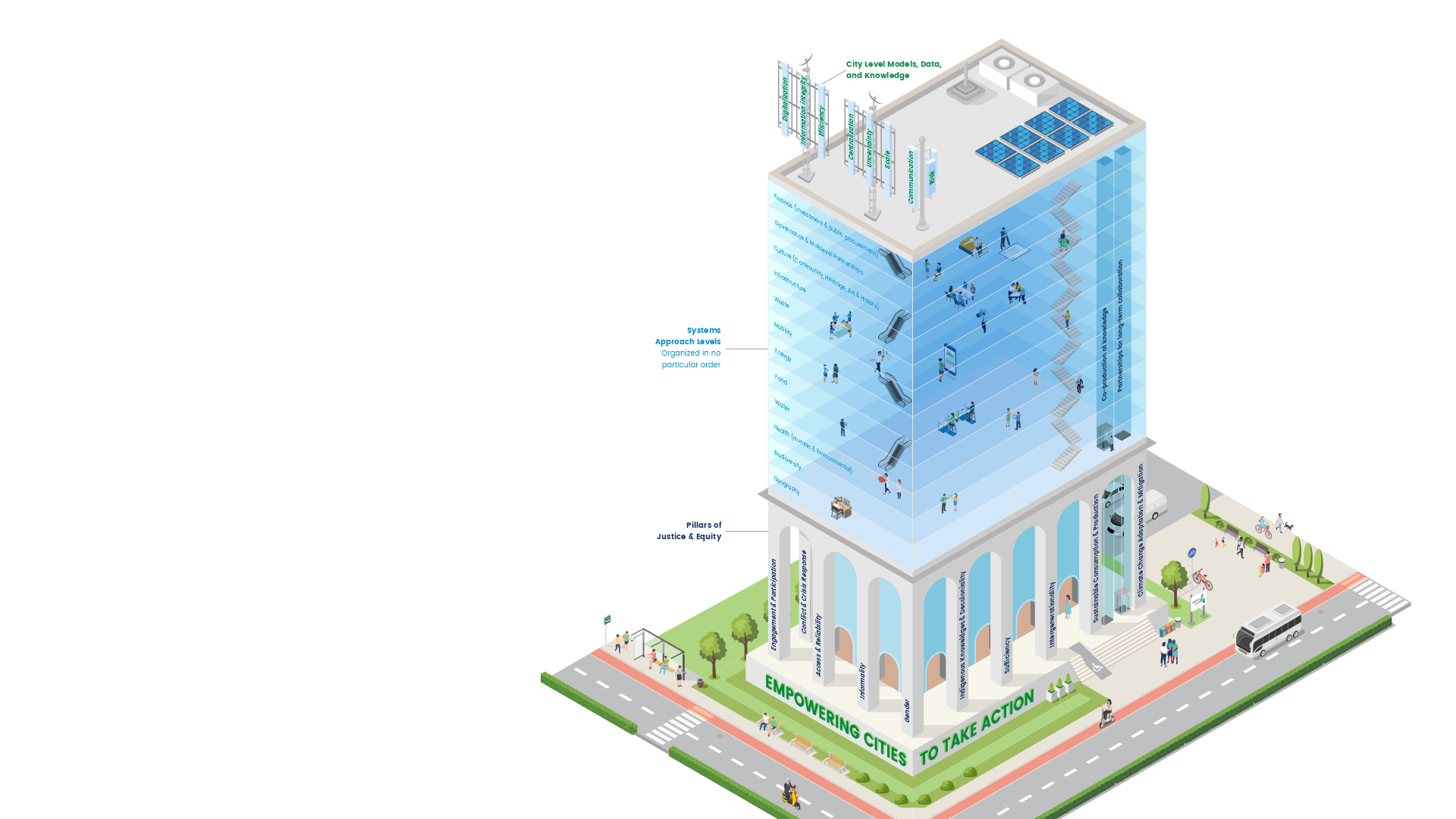
GRAA Building
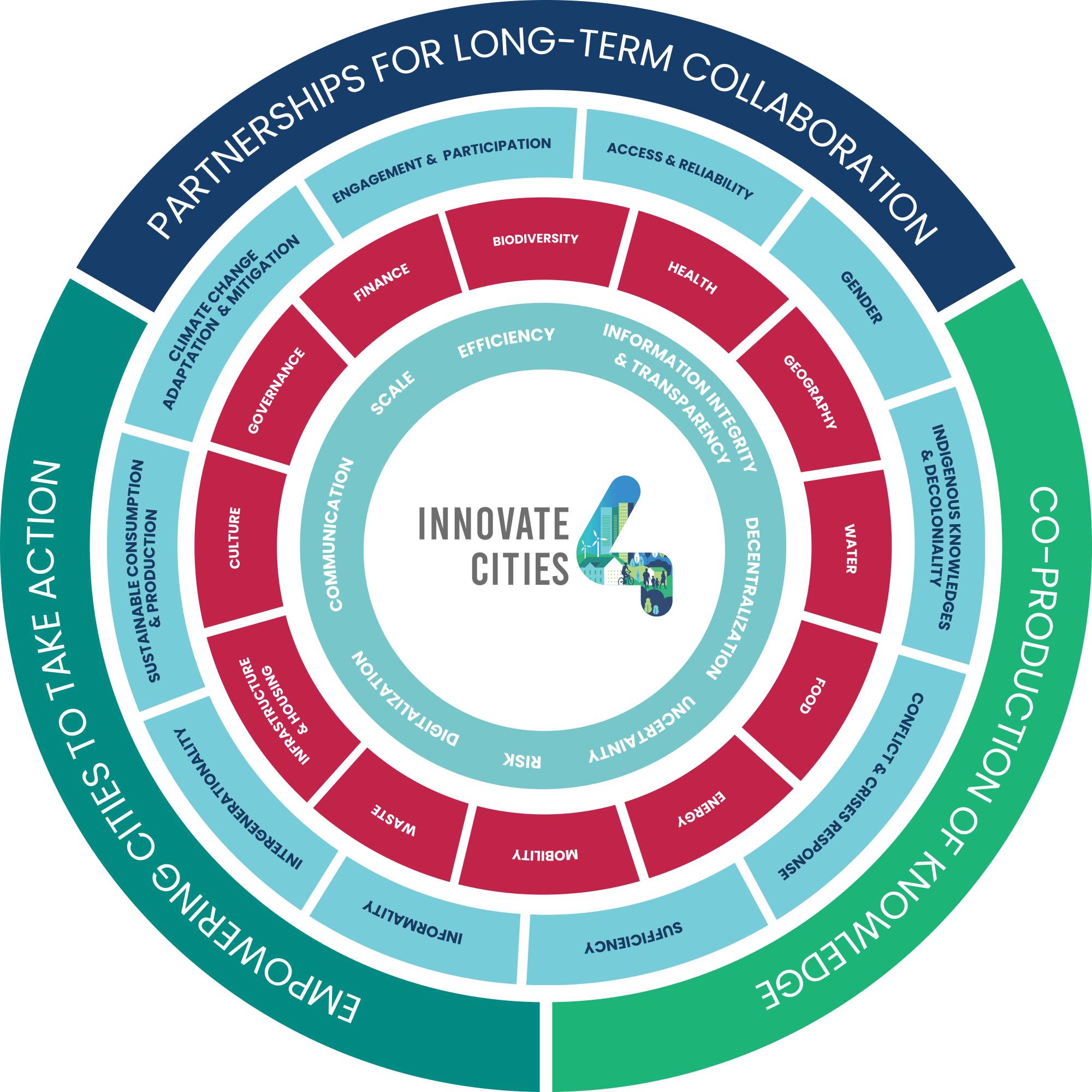
GRAA Wheel
Tower 1: City-Level Models, Data, and Knowledge
Scale
Research gaps: 8 | Priorities: 3
Understanding how climate impacts and solutions scale across different urban contexts and sizes.
View DetailsEfficiency
Research gaps: 1 | Priorities: 3
Optimizing urban systems and infrastructure for improved resource utilization and reduced emissions.
View DetailsUncertainty
Research gaps: 3 | Priorities: 2
Addressing uncertainty in climate projections and developing robust decision-making frameworks.
View DetailsRisk
Research gaps: 3 | Priorities: 3
Assessing and managing climate-related risks in urban environments.
View DetailsDigitalization
Research gaps: 4 | Priorities: 3
Leveraging digital technologies for climate action and urban resilience.
View DetailsCommunication
Research gaps: 1 | Priorities: 5
Effective communication of climate science and engagement strategies for urban stakeholders.
View DetailsTower 2: Systems Approach Levels
Infrastructure
Research gaps: 14 | Priorities: 10
Urban infrastructure design, implementation, and maintenance for climate resilience.
View DetailsEnergy
Research gaps: 8 | Priorities: 9
Urban energy systems, renewable transitions, and efficiency improvements.
View DetailsWater
Research gaps: 6 | Priorities: 7
Urban water management, conservation, and resilience to climate stressors.
View DetailsTower 3: Pillars of Justice and Equity
Culture & Heritage
Research gaps: 11 | Priorities: 6
Incorporating cultural heritage into climate action and resilience planning.
View DetailsHealth
Research gaps: 8 | Priorities: 5
Addressing health impacts of climate change in urban environments.
View DetailsIndigenous Knowledges
Research gaps: 7 | Priorities: 4
Integrating indigenous knowledge systems into urban climate action.
View DetailsTower 4: Foundation & Delivery Approaches
Governance
Research gaps: 10 | Priorities: 11
Effective governance structures and multilevel partnerships for climate action.
View DetailsFinance
Research gaps: 10 | Priorities: 12
Financing mechanisms for urban climate action and resilience.
View DetailsCo-Production
Research gaps: 6 | Priorities: 8
Collaborative knowledge production and participatory approaches.
View Details2024 Action Priorities
The GRAA identifies 259 action priorities for cities to address climate change challenges. These priorities are tagged with relevant GRAA topics.
#1
Identifying a strategic approach to retrofitting city building stock based on building typology to reduce emissions.
Priority#2
Quantify emissions and energy savings potential for deep energy retrofits of all buildings within the municipality and incorporation of digital tools to support emission reduction and boost systems' efficiency.
Priority#3
Develop policy to set new building standards and accelerate uptake of efficiency benchmarks.
Priority#4
Use of social science in engaging a broad group of stakeholders in new initiatives from planning through implementation.
Priority#5
Incorporate informal settlements and their residents in urban planning strategies through active consultation and co-creation.
Priority#6
Explore connections between water, energy, and materials to develop sustainable solutions in urban areas.
Priority#7
Quantify potential and chart implementation pathways for blue/green infrastructure and nature-based solutions to reduce emissions, build adaptive capacity and resilience, provide co-benefits, and address issues of biodiversity.
Priority#8
Assess planning policies and prioritize action to help mitigate urban heat island effect.
Priority#9
Explore adaptation and resilience in cities through culture and history to better understand their impact on climate action today.
Priority#10
Mainstream climate change action planning into city decision making, integrating mitigation and adaptation into comprehensive planning and budgeting processes.
Priority#11
Assess solutions to address the urgency of water-scarcity, pollution, and allocation in cities and their related ecosystems.
Priority#12
Support community-based and entrepreneurial innovation in climate smart food systems.
Priority#13
Further understanding is needed on potential for urban agriculture in terms of climate change mitigation and local food security.
Priority#14
Understand the impact of scope 3 emissions, urban mitigation planning, and how this can be best incorporated into local and subnational climate plans.
Priority#15
Assess energy efficiency increase through use of micro grids.
Priority#16
Evaluate balance between connected vs. distributed renewable systems based on access and reliability.
Priority#17
Explore how digital infrastructure can be built into transit systems to connect public and private transit technology.
Priority#18
Explore how urban plans can be shaped to reduce vehicle miles traveled and support active/shared transit.
Priority#19
Explore potential for a circular economy approach throughout city systems, and how these may differ in developed and developing cities.
Priority#20
Evaluate benefits of diversion and recycling considering supply and demand.
Priority#21
Better understand how sustainable consumption habits can be fostered.
Priority#22
Communicate community benefits of controlled landfilling to build understanding and buy-in of waste collection systems.
Priority#23
Collaboration and capacity building to develop bankable projects and increase creditworthiness to de-risk investment.
Priority#24
Increase focus on understanding the finance adaptation gap for cities, including short- and long-term financial needs for nature-based solutions.
Priority#25
Governance landscapes (considering formal and informal actors) to support greater generation of local and subnational revenue and which support groups marginalized due to gender, age, race, ethnicity, religion, indigenous status and disability.
Priority#26
Increase understanding of potential for digital financing—including crowdsourcing, digital green bonds, and others—to fund city-scale projects.
Priority#27
Strategic methods for awarding projects which prioritize sustainability, circular economy, and resilient low-emission roadmaps in urban solutions.
Priority#28
Develop flexible and distributed/networked solutions that can be expanded or changed as innovation progresses or financing allows.
Priority#29
Calculation and communication of economic and Health effects of action vs. inaction.
Priority#30
Evaluate combinations of high-tech and low-tech innovation.
Priority#31
Measures to evaluate a wide range of climate and societal co-benefits of climate solutions.
Priority#32
Explore incentives for local and subnational employees to innovate and take risks with transformative decisions.
Priority#33
Investigate emerging social innovations in cities that could be exported globally to scale solutions.
Priority#34
Explore effective governance frameworks to facilitate city-led research and innovation, including creating space for learning-by-doing and learning-from-failure.
Priority#35
Communication of uncertainty and risk of climate hazards for cities.
Priority#36
Understand the mitigation and adaptation potential of city actions, including implications for social equity and justice.
Priority#37
Generate city scale data for development of specific observation, models, and scenarios/ Develop and implement an interactive mapping platform to assess and improve urban natural infrastructure, focusing on benefits, risks, and equitable access across cities.
Priority#38
Reduce the gap in climate relevant data on vulnerable communities.
Priority#39
Equitable development and dissemination of knowledge and data inclusive of co-design and co-production through collaborative partnerships across public and private sectors, and civil sectors (including youth, indigenous populations, residents of informal settlements, and other marginalized individuals).
Priority#40
Support design of gamification and monetization tools for public participation in sustainable resource management, fostering greater awareness in residents and institute benefit-sharing mechanisms based upon avoided costs.
Priority#41
Institute both cross-departmental and cross-sectoral fora to effectively incorporate systems approach thinking, city-level data (geospatial, climate downscaling, etc.), and justice & equity into dialogues and decision-making, supported by mayors and public sector personnel.
Priority#42
Empower and incentivize cities by showcasing successful practices through media content to inspire others, with a focus on promoting people-centered development principles.
Priority#43
Neighborhood Adaptation Plans to empower local communities to respond to climate challenges effectively, with special attention to the needs of vulnerable populations to extreme climate, like heat and flooding.
Priority#44
Capacity building, training programs for local communities to acquire new skills & jobs related to a local impacts of climate change, especially marginalized communities, allowing them to lead conversations and projects most relevant to them.
Priority#45
Regional hubs to provide support and guidance, develop tools and guidelines, build capacity, and enhance local and subnational climate action plans for significant emissions reduction and climate resilience.
Priority#46
Advocacy support for cities' roles in national and multilateral forums, e.g. multilevel governance.
Priority#47
Strengthen partnerships between cities and other civil society groups – e.g. youth, workers, unions, businesses, and other organizations for city climate action.
Priority#48
Support or establish boundary spanning organizations to bridge scientific evidence and decision-making, supporting cities make better investments for climate resilience and adaptation.
Priority#49
Find opportunities to bridge the gap between research and practice inclusive of diverse knowledge types and cross-sectoral/intersectional insights into urban planning and policies.
Priority#50
Utilize participatory planning methods and stakeholder-facing web platforms for system modeling, complemented by simplified, graphic representations to enhance transparency and encourage community involvement.
Priority#51
Integrating socio-demographic indicators into assessment tools for housing affordability and climate resilience empowers communities to play an active role in urban renewal if transparently managed to avoid further unsustainable capture and commodification of housing markets.
Priority#52
Co-design, with local communities and governments digital base maps to address local climate challenges supported with targeted training and support.
Priority#53
Utilizing real-world living lab research and challenge-based learning fosters collaboration among stakeholders, enhancing the collective knowledge on urban sustainability.
Priority#54
Highlight the importance of collecting, filtering, and recording non-scientific knowledge, fostering dialogue, and co-creation of knowledge based on community experiences, including unsuccessful experiences.
Priority#55
Engage in joint action research, focusing on specific urban challenges through data-driven processes.
Priority#56
Launch a Community of Practice, utilizing university campuses as testbeds for innovation, and organizing interdisciplinary research projects.
Priority#57
Facilitate discussions among local governments, experts, and Indigenous peoples to develop localized knowledge frameworks and explore community-centered responses.
Priority#58
Knowledge integration is critical, combining soft skills (communication, collaboration) with technical expertise (data analysis, technology). This capacity-building approach empowers communities in climate action.
Priority#59
Analyze and integrate individual mindsets and capacities into urban coalitions, using case studies to develop gender-responsive and inclusive approaches.
Priority#60
Facilitate a workshop on innovative methodologies, demonstrate the use of open-source digital technologies, gather feedback from stakeholders, and enhance the UESI tool for improved practical application.
Priority#61
Open innovation challenges/inducement initiatives to engage communities and encourage cities experimenting with new governance/resource management models.
Priority#62
Public-Private Partnerships (PPPs) and other financing mechanisms, such as green bonds, energy performance contracting, and crowdfunding may be vital in ensuring cities have the necessary resources for sustainable transitions.
Priority#63
Expand the tripartite consultation model involving local governments, provincial governments, and universities to facilitate collaborative management, flexible governance, and knowledge sharing allowing municipalities to benefit from broader networks capable of delivering locally tailored key performance indicators (KPIs) in climate planning.
Priority#64
Flexible funding models must be designed in response to limitations of existing procurement systems, designing open training programs that foster continuous engagement and knowledge transfer to enable civil society partnerships with the public and private sector.
Priority#65
Foster regional cooperation for climate action through a single-data system for climate monitoring and cross-sector collaboration. Ensure strong support from key actors in collaborative partnerships, and establish multi-tiered structures for local climate action planning with political buy-in.
Priority#66
Conduct a qualitative cross-case comparison of various partnership types to design effective cross-sector partnerships for equitable climate mitigation.
Priority#67
Effective strategies must focus on energy-efficient building solutions, cooling systems, and sustainable urban resilience methods tailored to local conditions and resources available across the systems in place.
Priority#68
Key actions emphasizing coordination between mitigation and adaptation efforts within urban areas include water harvesting, promoting solar energy, preventing soil erosion, and developing hydroponics for endangered plants.
Priority#69
Nature-based solutions (NBS), including mangrove restoration, urban tree management, daylighting buried urban streams, are critical for climate adaptation, carbon sequestration, and increasing biodiversity.
Priority#70
Participatory and bottom-up methods for quantifying GHG emissions and other environmental impacts yield more precise data, and should be incorporated into city-level practice to guide climate action that reflects local needs.
Priority#71
Develop and implement improved measurement systems and standardized indicators to advance local and subnational monitoring and disclosure for climate budgets.
Priority#72
Utilization of GIS and AI to integrate socio-economic variables into climate vulnerability assessments, enhancing adaptation strategies.
Priority#73
Increase the use of nature-based solutions to reduce heat stress, improve water management, and increase urban biodiversity, to reduce climate inequality and increase resilience in frontline communities.
Priority#74
Use the 'Return of Experience' approach to gather data on past floods, creating resilient development scenarios to enhance local and subnational resilience projects. Utilize 'stretch and transform' strategies to challenge energy institutions and implement the UN Declaration of the Rights of Indigenous Peoples (UNDRIP) in energy policy.
Priority#75
Consider co-benefits of initiatives that incorporate both adaptation and mitigation, and require governance and finance to be part of decision making for these projects.
Priority#76
Conduct research on place-based decarbonisation approaches and develop the Place-Based Retrofit & Regeneration Models project.
Priority#77
Implementing targeted greening initiatives, including pocket greens, vertical greening, and roof greening, in interstitial open spaces to mitigate urban heat and support climate adaptation in vulnerable urban areas.
Priority#78
Implement climate resilient drainage and flood mitigation measures, improve solid waste management, and upgrade targeted communities.
Priority#79
Put boundary organizations in place to help communities accelerate adaptation to climate change, including training and workshops to develop community adaptation strategies through participatory approaches.
Priority#80
Analyze city and energy strategy documents to identify equitable models of energy development.
Priority#81
Develop and implement climate resilience strategies that include diverse groups, such as local policymakers and marginalized communities.
Priority#82
With appropriate training and oversight, advanced data analytics and AI-driven data extraction and textual analysis from documents can effectively monitor city policies, enabling governments at all levels to refine place-based approaches and manage sustainability initiatives more efficiently, improving their capacity to address consumption and production challenges.
Priority#83
Reimagining consumption of space in terms of positional value and occupancy may enable sustainable management of community spaces through sustainable practices catering to both environmental and social needs.
Priority#84
Strengthen policies, promote sustainable practices, and support community-led initiatives to combat plastic pollution.
Priority#85
Implement interlocal and subnational consortia for efficient solid waste management, allowing economies of scale to reduce costs.
Priority#86
Implement strategic measures for sustainable agriculture, including installing heaters for greenhouses and using biomass for production.
Priority#87
The emphasis on long-term partnerships and coalition building for climate action inherently involves future generations, highlighting the importance of including diverse age groups in decision-making processes.
Priority#88
Creative expression through storytelling and art in both traditional and new media serve as powerful tools for intergenerational education and mobilization in addressing climate change and grappling with long-term planning on narrative timelines beyond the scope of conventional policy discussions to ensure future generations can articulate what resilient systems they require to inherit.
Priority#89
Designing upskilling/training environmental civil employment programs to prepare youth and other insufficiently supported groups for climate action jobs will ensure those most affected by the transition have critical capacity for ensuring climate policies support individual and societal needs across generations.
Priority#90
Use the (GCOM / Student Energy) Youth Impact Framework to engage youth in climate and energy solutions, fostering their participation through pilot projects and to measure the success and impact of their involvement through the indicators of this framework
Priority#91
Establish Urban Youth Councils, ensuring gender equality, followed by capacity-building workshops and mentorship to empower youth in governance.
Priority#92
There is a significant inadequacy in the funds allocated under the Paris Agreement for vulnerable regions like Africa, the Middle East, and Latin America, highlighting the urgent need for sufficient, well-targeted funding to address climate change challenges in the Global South in recognition of disproportionate distribution of benefits under the existing market paradigm.
Priority#93
Innovative approaches focused on 'sufficiency' must emphasize resource efficiency at all societal levels – particularly targeting the incompatibility of overdeveloped economies and unsustainable cultural consumption practices which undermine sufficient resource access in locales across developing economies – requiring methodologies to guide consumption reduction, promoting minimalism, in fostering sustainable communities able to meet their needs without generating unnecessary losses.
Priority#94
Incorporating resource-efficient urban tree management and soil improvement into city planning exemplifies how sufficiency can be integrated into urban resilience strategies. Such measures reflect an adaptive, bottom-up approach that prioritizes resilient infrastructure over extensive urban, bottom-up approach that prioritizes resilient infrastructure over extensive urban redevelopment. redevelopment.
Priority#95
Raise awareness about sufficiency, identifying existing measures and opportunities in cities climate action plans.
Priority#96
Developing business models that focus on providing what people need with lower or no emissions emphasizes the importance of sufficiency in urban planning.
Priority#97
Initiatives focused on land and sea-based climate resilience and long-term sustainability that emphasize the integration of Indigenous knowledges into urban governance and sustainability practices.
Priority#98
Institutionalize Indigenous knowledge, particularly regarding ocean preservation, to strengthen climate resilience through cultural practices providing invaluable insights into sustainability with a decolonial approach to climate action, highlighting the importance of restoring and maintaining cultural and environmental integrity.
Priority#99
Emphasize the need for tools that encourage community participation and ensure local voices are heard in planning and compliance processes related to sustainability, with the integration of Indigenous knowledge systems into decision-making processes promoting equity and resilience in the face of contemporary challenges.
Priority#100
Implement and evaluate the LCR Approach through Phase I and II pilot programs involving municipalities and First Nations communities.
Priority#101
Integrate Indigenous Knowledges into curricula and policies to promote climate change adaptation and recognition of indigenous rights in governance.
Priority#102
Collaborate with Indigenous cultural and design representatives to integrate their knowledge into development guidelines.
Priority#103
The theme of inclusivity and equity is integral to the discussions around community-based solutions and ensuring that climate action benefits all members of society, with gender dimensions specified and participatory processes that actively involve women and marginalized genders may contribute to the development of more inclusive and equitable climate adaptation strategies.
Priority#104
Engaging women and marginalized groups of varied gender identities in ecological restoration and urban planning ensures that diverse perspectives shape the future of cities to safely accommodate all community members
Priority#105
Urban resilience planning that integrates socio-demographic indicators, including gender, allows cities to address the diverse needs of their populations, with a specific focus on jobs, re-skilling, and the equitable distribution of benefits among women and vulnerable groups across the gender spectrum.
Priority#106
Empower women's collectives to assess home resilience and advocate for climate resilient urban planning.
Priority#107
Recognizing diverse forms of leadership, including the prominent role of women in communities, is crucial for fostering collective climate action.
Priority#108
Acknowledge the challenges of extreme heat, particularly affecting women in vulnerable communities, and support their needs through research and action initiatives.
Priority#109
Address gender-sensitive issues in governance and capacity building, empathetic neighborhoods also consider gender perspectives, ensuring that women's voices and needs are central in planning and decision-making processes.
Priority#110
Promote inclusive design principles to demonstrate benefits for market expansion and societal equity, integrate different mindsets and capacities into urban coalitions to develop gender-responsive approaches to local finance initiatives.
Priority#111
Enhance access to climate finance for local and gender-responsive adaptation by employing collaborative approaches and strengthening knowledge brokers' capacity.
Priority#112
Analyze and iCo-create and implement the Gender Responsive Resilience Planning Framework, utilize innovative techniques such as photovoice, integrate local perspectives, and develop tailored resilience strategies to foster sustainable development and disaster preparedness.
Priority#113
Address informal systems through formalization pathways for access to essential resources, involving informal communities in decision-making to achieve more equitable and sustainable resource management practices which recognize and integrate practices to enhance the resilience and inclusiveness in city systems.
Priority#114
City officials must acknowledge the role of informal community initiatives, formalizing and supporting their development, to ensure lasting benefits can be achieved. Informal community efforts, such as self-organized environmental clean-ups, play a significant role in promoting urban sustainability. Therefore, cities need to recognize and support these grassroots initiatives by providing formalized resources and assistance.
Priority#115
Collaborative Neighborhood Networks facilitate informal engagement between communities, planners, and city stakeholders in mediation to foster social inclusion in decision-making processes and provide models for coordination across cities.
Priority#116
Develop mechanisms for equitable access to funds supporting informal settlement communities in achieving New Urban Agenda commitments.
Priority#117
Establish informal, virtual mediation spaces for community engagement in emission reduction strategies. Support informal solutions and leverage community engagement to ensure inclusive responses to urban challenges.
Priority#118
Investigate and apply scenario planning in informal communities to improve disaster management and resilience.
Priority#119
Highlight the reality of climate impacts on informal settlements, discuss the central role of informality in urban climate action, and explore ways to reframe the narrative and improve action, finance, and research on climate change and informality.
Priority#120
Making climate-related data accessible to the public and cities is crucial for fostering effective climate action.
Priority#121
Ensuring reliable access to resources such as clean energy and water is vital for sustainable development; therefore, cities must prioritize the creation of infrastructure that is resilient and accessible to all, particularly marginalized communities.
Priority#122
Governance innovation plays a significant role in the process of establishing monitoring systems that track the implementation and consequences of local climate action plans. These systems utilize both publicly available data and information reported by municipalities, ensuring transparent and reliable access to climate information.
Priority#123
Improving access to reliable data on climate action remains a priority. Digital platforms that deliver real-time information on environmental indicators and climate performance across cities enable more informed decision-making, ultimately supporting the development of robust climate strategies.
Priority#124
Develop a joint monitoring system using publicly available data to support local governments in fulfilling reporting obligations and enhance decision-support.
Priority#125
Develop site-specific recommendations for charging infrastructure to enhance accessibility and reliability for low-income communities.
Priority#126
Discuss and implement multi-level climate action through policy actions and integration into NDCs.
Priority#127
Develop inclusive digital infrastructure and enhance digital capacities to support local innovations.
Priority#128
Putting local communities at the forefront of climate projects ensures that initiatives are sustainable and grounded in cities' real needs. Tools such as creative storytelling and residential community building initiatives can enhance engagement and participation at the grassroots level.
Priority#129
Community engagement, bottom-up participatory approaches that integrate local knowledge and GIS technologies into urban planning processes must provide citizens ownership of projects, such as managing urban green spaces, fosters active participation and long-term commitment.
Priority#130
Gamified engagement tools and digital platforms enhance public participation in climate actions, further supporting the development of inclusive and effective climate strategies.
Priority#131
Involve diverse groups in developing climate resilience strategies, emphasizing peer-to-peer learning and citizen participation, participatory approaches to risk mapping inclusive of diverse voices.
Priority#132
Digital tools, such as app-based sustainability tracking and geospatial data simulations, can support the monitoring and implementation of climate action at both the individual and city levels. By providing a platform for efficient data sharing and communication, digitalization enhances decision-making processes.
Priority#133
Innovations in digital tools, including Lidar data, GIS, and AI-driven analytics, significantly improve climate action planning. By automating greenhouse gas calculations and policy assessments, cities can streamline decision-making and adopt more accurate, data-driven approaches to sustainability.
Priority#134
Digital tools like AI-powered climate risk assessments and platforms that track greenhouse gas emissions index data allow cities to integrate advanced technologies into urban planning, enabling effective monitoring, assessment, and adaptation of climate strategies.
Priority#135
Create digital base maps and utilize open-source technologies for local decision-making.
Priority#136
Develop a Knowledge and Innovation Exchange, a digital marketplace that matches climate innovation projects with investors.
Priority#137
Focus on digital tools, such as Digital Twins for data collation, can enhance coastal resilience strategies. Utilize GIS and geo-information modeling to analyze spatial-temporal data for assessing urban sprawl impacts and develop comprehensive greenhouse gas inventories.
Priority#138
Develop AI models to revolutionize urban planning, such as AI-assisted textual analysis methodologies to policy, planning, and reporting documents while ensuring ethical use.
Priority#139
Scenario modeling and data-driven simulations may further assist cities in navigating uncertainties related to climate change impacts, particularly when incorporating climate-morphological modeling for various future scenarios.
Priority#140
Cities grappling with uncertainty, particularly during post-disaster recovery, must adopt flexible frameworks that facilitate adaptive and participatory planning.
Priority#141
The integration of climate risk assessments and monitoring mechanisms is vital, ensuring cities are better equipped to handle uncertainties associated with climate change. Together, these strategies create a robust framework for addressing the complexities and unpredictabilities of climate impacts.
Priority#142
Embrace uncertainty and complexity by adopting a mindset that welcomes experimentation, failure, and continuous adaptation.
Priority#143
Utilize Dynamic Risk Assessment (DRA) methodology to analyze risks and interdependencies in urban contexts.
Priority#144
Employing spatial network analysis and local datasets helps urban planners understand uncertainties in transportation systems, guiding future developments.
Priority#145
Innovative financial instruments can help address uncertainties related to climate financing.
Priority#146
Utilize environmental scanning, scenario planning, and community engagement methods to develop resilient and inclusive urban living environments.
Priority#147
Cities must prioritise the optimisation of resource demands across all systems to minimize waste, particularly focusing on integrating renewable energy into transit and active transport solutions (which build upon water, food, and energy systems), including simplified graph-based transit modeling to efficiently design and test projects, ensuring cities can implement proven improvements with minimal delays.
Priority#148
Develop the CityRetroFit tool to ensure efficient energy usage and stakeholder engagement.
Priority#149
Implement Green BIM in architectural projects to optimize resource usage and promote energy-positive design.
Priority#150
Smart grids allow for greater efficiency and resilience in energy networks, requiring closer collaboration between businesses and regulators.
Priority#151
Standardize data collection and analysis processes to improve the efficiency and quality of emission monitoring and climate action plans.
Priority#152
Implementing enhanced monitoring systems for drought and land use changes improves the efficiency of resource allocation and management in urban environments. Develop advanced mobility modeling methodologies to enhance urban mobility solutions.
Priority#153
Develop and implement a carbon budget framework, including emissions quantification, reporting, and adjusting budgets based on equity and accountability principles.
Priority#154
Scaling approaches such as the clustering framework, which identifies urban typologies based on climate-morphological peers, allows cities with similar characteristics to implement replicable models, enhancing the scalability of local projects.
Priority#155
Research on, and deployment of, nature-based solutions, such as mangrove restoration and ecological restoration projects, offer scalable options for cities adapting to climate change, and expanding initiatives across regions requires interdisciplinary collaboration to ensure that they are effectively tailored to different urban contexts at the relevant scale necessary.
Priority#156
City-to-city knowledge transfers and resource pooling are also critical for scaling climate adaptation strategies. By sharing best practices and solutions, cities can collectively enhance local-level efforts to address climate challenges on a larger scale.
Priority#157
Aggregate and analyze global city climate project data, assess project needs, provide technical assistance and matchmaking support, and collaborate with city networks and other organizations to enhance project readiness and implementation.
Priority#158
Differentiating the scale of interventions between cities and regions enables tailored responses to urban challenges, addressing specific local needs. Scale up the Carbon Monitor Cities 2.0 approach to multiple cities, particularly in low-and-middle-income countries, for real-time emissions data.
Priority#159
Innovative risk modeling, such as integrating climate data with urban tree growth predictions, helps cities anticipate and manage long-term risks. Incorporating risk management into participatory, community-driven city planning is crucial, particularly when addressing climate risks.
Priority#160
Cities must implement monitoring frameworks like the Sendai Framework and align with the Sustainable Development Goals (SDGs) at the local level to track and reduce climate risks, ensuring that vulnerable populations are adequately protected.
Priority#161
Risk must be viewed in the context of the threat posed by inaction, not in the context of risk to existing institutional structures and practices, which has previously created a dialogue of aversion to risk when it means taking on the responsibility of tackling transformative change.
Priority#162
Address political risks by fostering cooperation among different municipalities and political leaders for shared infrastructure projects.
Priority#163
Unlock financing by addressing the logics behind risk perceptions, leveraging place-based transition funds with a holistic understanding of risk and impacts.
Priority#164
Blended finance can reduce investment risks, making climate action projects more viable.
Priority#165
Developing a management framework using the Ecosystem Services Provision Index (ESPI) helps in assessing and managing risks associated with ecosystem services.
Priority#166
Innovative approaches, such as storytelling through art, film, music, dance, and writing, are needed to help simplify complex climate challenges and counter unsustainable narratives, making solutions accessible and engaging for diverse audiences beyond the scientific community.
Priority#167
Participatory planning processes and collaborative governance structures ensure transparency, build trust, and create open dialogues that support the success of climate actions – achieving transparency around the money behind unsustainable messaging and who is benefiting from inequitable unsustainable systems will help target which levers of change require more force to move.
Priority#168
Gamified tools and public-private partnerships further enhance engagement by breaking down complex climate goals into understandable actions for communities, facilitating a shared understanding of urban sustainability efforts.
Priority#169
Protocols that curate case studies and web-based platforms/fora for stakeholder engagement are needed to promote knowledge sharing and best practices across regions, strengthening collaborative efforts to share solutions and build solidarity.
Priority#170
Implement positive communication strategies to engage and collaborate with communities in contextually appropriate climate resilience initiatives.
Priority#171
Utilize podcasts to facilitate discussions and share innovative solutions and policies among urban leaders and other stakeholders to promote climate resilience and action.
Priority#172
Strengthen communication with citizens to enhance understanding of flood risks and involve them in resilience planning.
Priority#173
Better coordination among city teams responsible for climate mitigation and adaptation requires centralized structures, such as cross-departmental committees, provide a coordinated approach to sustainability planning of decentralized stakeholders, checking alignment of adaptation, mitigation, and sustainability strategies and ensuring that climate actions are consistent and cover all relevant sectors and their interactions with each other.
Priority#174
Multi-level governance models are another form of centralization that support coordination between municipalities, national governments, and various sectors to allow localized flexibility, fostering an environment of shared responsibility and empowerment."
Priority#175
While central governance can help organize large-scale climate actions, cities benefit greatly from decentralized initiatives involving grassroots innovation, balancing centralized coordination with local-level engagement. This dual approach ensures that climate strategies are both scalable and deeply rooted in community needs.
Priority#176
Decentralizing decision-making processes enables local authorities to tailor solutions to their unique social and economic conditions.
Priority#177
Ensuring the accuracy and reliability of climate-related data emerged as a key priority, particularly for smaller municipalities that face challenges in managing and analyzing sustainability documents effectively. Accurate, verifiable, replicable information is critical for informed decision-making, transparency, and accountability in climate action.
Priority#178
Tools like net-zero trackers climate scorecards and further support the integrity of data by offering transparent, accountable records of climate plans and progress. Technologies such as IoT and digital twins also play a crucial role in ensuring data accuracy, enabling cities to monitor climate impacts and base their policies on solid, reliable information. These advancements ensure that climate actions are grounded in trustworthy data, allowing cities to track their progress effectively and respond to emerging challenges with confidence.
Priority#179
Information integrity should continually be examined in the context of its manipulation, and the potential beneficiaries and victims of this manipulation, understood in the context of how justice & equity are inhibited by existing/emerging information systems and the ways in which bad data can take hold in the perspectives and practices of communities in cities globally.
Priority#180
Enable the use of grey literature on urban action in the development of the AR7 IPCC Special Report Climate Change and Cities to enhance the policy relevance of the report.
Priority#181
Explore the integration of AI and machine learning tools in climate data analysis to improve information integrity and transparency.
Priority#182
Develop a clear definition and guidelines for NPCs, reviewing methodologies for implementation to ensure information integrity.
Priority#183
Cities need tailored strategies to reflect their distinct geographical and ecological realities, with geographic information systems (GIS) enabling understanding of what climate actions may be suited to unique physical environments, helping cities develop place-based resilience strategies that are more effective and contextually relevant.
Priority#184
Coastal areas, in particular, face unique vulnerabilities, such as rising sea levels and ecosystem degradation, which necessitate targeted nature-based solutions like mangrove restoration. Inland cities, on the other hand, may prioritize water conservation strategies that reflect their own geographical challenges. In all instances, bespoke solutions must be built around geographic system constraints.
Priority#185
Utilizing geo-referenced data allows for better understanding of the spatial scales of studies related to urban sustainability, linking local actions to broader regional goals.
Priority#186
Integrate mobility modeling into infrastructure planning to develop accessible web applications.
Priority#187
Utilize high-resolution geo-data to conduct detailed coastal hazard modeling and vulnerability assessments. Conduct comparative analyses of land-use patterns and green infrastructure to identify opportunities for enhancing urban biodiversity and resilience.
Priority#188
Innovations in nature-based solutions, such as the daylighting of streams, demonstrate how cities can mitigate climate impacts while simultaneously enhancing the resilience of urban ecosystems – restoring natural waterways not only supports biodiversity but also improves urban environments by creating greener, more adaptive spaces.
Priority#189
Ecological restoration and urban forest management are key strategies for bolstering biodiversity. By prioritizing soil Health and tree canopy growth integrated within infrastructure planning, cities can create thriving ecosystems that are better equipped to adapt to climate change and remain biodiverse and sustainable.
Priority#190
Incorporating advocates for biodiversity into governance structures, such as civic assemblies, ensures that ecological considerations are fully integrated into urban planning and climate action – agency for non-human species must be elevated in city-level stakeholder dialogues.
Priority#191
Develop and rehabilitate eco-friendly tourism trails, such as the Bee Trail, to enhance biodiversity and local livelihoods.
Priority#192
Implementing nature-positive engineering focuses on integrating biodiversity considerations in urban planning, promoting sustainable practices that protect local ecosystems.
Priority#193
Urban planning efforts must demonstrate how to incorporate clean air, water, and green spaces into directly improving public Health and mitigating the adverse effects of climate change on communities, and environmental impact assessment of developments must involve valuation of ecosystems services.
Priority#194
Cities restoring natural ecosystems, such as mangroves and urban forests, support biodiversity and promote public Health by improving air and water quality – investment in ecological restoration sees return through multiple Health benefits for their residents alongside environmental gains.
Priority#195
Promoting clean fuel alternatives, such as using coconut for cooking, reduces Health risks associated with traditional fuels while contributing to environmental sustainability.
Priority#196
Enhance community-based initiatives to improve Health outcomes while addressing climate resilience, such as heat action plans, mental Health benefits from water sensitive, nature based solutions.
Priority#197
Managing urban water systems through measures such as the restoration of natural waterways, ecological landscape design, and micro-catchment designation, is critical for climate adaptation and mitigation, as water resilience strategies must be centralized in city planning.
Priority#198
Rainwater harvesting and similar water-sensitive urbanism techniques are vital for ensuring sustainable water use. They allow cities to manage water supply during droughts and mitigate the risk of flooding during periods of heavy rainfall, offering a comprehensive approach to urban water resilience.
Priority#199
Implement strategies for improving access to potable water and address related vulnerabilities in urban communities.
Priority#200
Develop digital solutions for climate resilience, including smart water meters and flood scenario modeling.
Priority#201
Sustainable food systems are crucial for climate resilience, and cities can encourage local food production and consumption through community involvement in urban agriculture, forestry and land management, which reduces the carbon footprint of food supply chains and enhances food security.
Priority#202
By integrating food security into urban planning, cities develop shared platforms for evaluating food sustainability to track local supply chains and ensure resilience against climate impacts through practices that require local production and waste reduction.
Priority#203
Facilitate local and sustainable food access initiatives through improved transportation systems for food delivery.
Priority#204
City-scale understanding of decarbonized energy systems, diversified power generation strategies, and passive design standards are critical for achieving fully decarbonized energy, and grid reliability will be contingent upon improved research and application of digital technologies and demand-side management strategies to address these reliability and resilience challenges.
Priority#205
Maximizing renewable energy, efficiency, and distributed energy systems to decrease reliance on centralized power grids and enhance energy resilience.
Priority#206
Develop neighborhood-scale emission-based tools for community governance and compliance.
Priority#207
Digitalization of the electric grid is essential for resilience and efficiency in energy transition.
Priority#208
Adapt regulation to phase out fossil fuel use and promote clean energy solutions.
Priority#209
Develop a global dataset of renewable energy clusters to identify effective transitions.
Priority#210
Use cost optimization models to evaluate impacts on renewable energy investments.
Priority#211
Supporting the use of solar panels in urban communities through partnerships with local NGOs encourages renewable energy adoption and reduces reliance on fossil fuels.
Priority#212
Develop and implement ecodistricts focusing on zero-carbon energy transition and energy efficiency standards, including smart lighting, innovative collaborations with building owners or tenants.
Priority#213
To effectively reduce emissions in urban areas, cities must prioritize the development of multimodal transport systems that decrease reliance on cars, maximize road utilization while minimizing land use, requiring significant investments in public transport, cycling, and walking infrastructure.
Priority#214
Utilize innovations in transit systems, such as simplified graph-based modeling, enable cities to efficiently design, test, and implement transportation projects aimed at reducing emissions.
Priority#215
Examine potential impacts of fleet downscaling and electrification across modes, utilizing technological advancements for modeling transit systems, facilitating stakeholder engagement and creating efficient, decarbonized mobility options.
Priority#216
Expand railway systems to encourage sustainable transportation and reduce reliance on private vehicles.
Priority#217
Develop methodologies using traffic models to calculate GHG emissions, improving transportation-related emission reduction strategies.
Priority#218
Establish and manage a public bike-sharing system, develop cycling infrastructure, leverage big data for planning, and implement a Training of Trainer approach to promote safe cycling and engage youth in climate action.
Priority#219
Identify neighborhoods for EV charging infrastructure and engage residents in capacity-building.
Priority#220
Efforts to reduce waste, particularly through community-driven initiatives, play a significant role in enhancing urban sustainability. Zero-waste programs and the promotion of circular economies should be central to waste management strategies, ensuring that both energy and material resources are used efficiently to minimize environmental impact.
Priority#221
Sustainable waste management practices are crucial for urban resilience, necessitating the implementation of systems that reduce waste and promote recycling, particularly inducing participatory processes that engage private sector operators to reduce waste materials in their supply chains and compensation communities for engaging in waste management as consumers of what they produce.
Priority#222
Working with waste management companies to localize and quantify methane emissions is crucial for effective waste management.
Priority#223
Scale up infrastructure for waste treatment and establish interlocal and subnational consortia for efficient management.
Priority#224
Building resilient infrastructure that can withstand the impacts of climate change across its lifespan under local conditions is essential for long-term urban sustainability.
Priority#225
Using sustainable and local materials in construction reflects a commitment to eco-friendly infrastructure, sustainable construction practices and creating spaces that serve multisystem purposes, built to deliver within local system capacity.
Priority#226
Long-term infrastructure planning, informed by strategic foresight and cross-sectorally inclusive urban design, is critical for building resilient cities capable of adapting to climate risk under a holistic systems approach aligned with sustainability goals and every community's needs.
Priority#227
Implement circular and bio-based building technologies using sustainable materials.
Priority#228
Transform campuses into living laboratories for experimentation and testing of new sustainable technologies.
Priority#229
Analyze tree line and urban forest data to develop indicators for sustainable forest management, enhancing urban livability.
Priority#230
Use the Climate Innovation Readiness Navigation (CIRN) encourages the development of innovative infrastructure projects.
Priority#231
Propose innovative infrastructure solutions that integrate community needs and resilience strategies, like self-sovereign land approaches to support regenerative urban communities.
Priority#232
Developing a Green Cities Guarantee Fund to attract capital for urban infrastructure projects ensures long-term sustainability and climate resilience.
Priority#233
Enhance existing environmental audit systems to regulate heat emissions from buildings.
Priority#234
Cultural expressions, such as storytelling and art, play a pivotal role in educating communities about climate action, and cities must incorporate cultural heritage into their sustainability strategies to preserve local identities while addressing climate challenges. By engaging in participatory planning and storytelling, cultural and community engagement strengthens local resilience. This integration ensures that climate action solutions are grounded in local identity and history, fostering community ownership and long-term success.
Priority#235
A city is only sustainable as long as it remains an active, vibrant community, so governance models must recognize cultural values, advocates, and contributors to sustainable discourse that ensure the diversity of community values and heritage are represented in urban planning and efforts to create a more inclusive and resilient urban landscape across all systems and inclusive of all local species.
Priority#236
Facilitating interdisciplinary research tours, eco-tourism, and collaborative art projects promotes heritage sites, cultural engagement and raises awareness about sustainability issues within communities.
Priority#237
Integrate cultural philosophies into sustainability practices, fostering community engagement.
Priority#238
A shift is needed from traditional top-down governance models to participatory and inclusive systems that engage all societal stakeholders, particularly marginalized groups, in decision-making processes under a lens of just & equitable participation in systems with equitable access to information.
Priority#239
Models of decentralized control are required to navigate the complexities of multilevel governance, promote equity, and support the integration of nature-based solutions into urban planning, especially in rapidly urbanizing areas.
Priority#240
A strong focus on governance highlights the need for better coordination among teams responsible for climate mitigation and adaptation. Partnerships across multiple levels of governance, including regional and international collaboration, are crucial for cities like Macul and Menjez to effectively address climate challenges.
Priority#241
Establishing an ongoing forum to facilitate multi-level governance structures that allow cities to coordinate across different sectors with national governments, regional organizations, and international institutions.
Priority#242
Flexibility in governance, such as permitting municipalities to develop their own key performance indicators (KPIs) supported by collaborative benchmarking, empowers local authorities to take ownership of their climate strategies and foster collaboration between city governments, communities, and non-profits, prioritising flexible funding and adaptive policies that can evolve with changing climate conditions.
Priority#243
Intranational committees are essential for policy development and financial strategies across governance levels.
Priority#244
Employing a multi-level governance approach to analyze urban development processes ensures collaboration and coherence in addressing sustainability challenges.
Priority#245
Investigate multilevel diplomacy through international conferences to enhance environmental governance.
Priority#246
Facilitate multi-level governance through experimentation and agility.
Priority#247
To support large-scale climate projects, innovative financing mechanisms such as green bonds, public-private partnerships, and energy performance contracts are essential to offer blended finance across sectors.
Priority#248
AI-driven policy analysis can enhance city-level climate action by providing data-driven insights into emergent patterns for effective planning of funding allocations to generate the greatest climate response with targeted investment to reduce climate risk and potential losses across city systems.
Priority#249
Sustainability of financing options should be evaluated against system impacts under a lens of justice and equity, with flexible public procurement tools to support the adaptive nature of climate projects, ensuring they are both inclusive and sustainable.
Priority#250
Sharing financial resources across departments and ensuring procurement alignment with climate goals will facilitate the effective implementation of action plans, and provide avenues for collaborating with community organizations over dimensions of any city-level systems.
Priority#251
Workshops focused on concept note development and funding opportunities to secure climate finance and improve project plans.
Priority#252
Continued engagement with private companies for technology solutions is vital for conducting feasibility studies and completing projects.
Priority#253
Collaboration between governments, businesses and training institutions to design upskilling/training environmental employment programs to prepare the population (youth, disadvantaged groups, unemployed, people working in the FF sector, etc.) for climate action/green jobs. This is important not only to ensure those who needs the jobs the most are able to access them, but also to ensure that climate action is not further delayed because of an unprepared workforce.
Priority#254
Quantify the workforce gaps across sectors (e.g. building electrification, retrofits, electric vehicles, etc.) and cities, and the investments needed on training and skills development to prepare the workforce for the transition.
Priority#255
Examine policy design for a just transition in decentralizing and distributing job creation in climate action across the population, understanding associated unsustainable job losses to ensure opportunity for participation in the transition and inequalities are not being increased.
Priority#256
Local governments should plan all action in accordance with 1.5°C overshoot scenarios expected within the next generation, financing local level development across all sectors at speed and scale exceeding that of the national-level multilateral dialogue.
Priority#257
An understanding of the implications of civil conflict and crisis of both natural and anthropogenic origin in terms of both economic, social, and environmental cost (including displacement, loss and damages, and misattribution of resources towards unsustainable practices) is imperative in fostering sustainable local governance free of conflict-related losses.
PriorityGRAA 2024 Priority Knowledge Gaps
The GRAA identifies 160 priority knowledge gaps that require further research to better understand and address climate change challenges in urban contexts.
#1
Research is needed to better understand the benefits and diverse values of urban nature, including for health and wellness, and how these vary by socioeconomic groups, including Indigenous peoples, within and across cities. Then building from this understanding further research is needed on how utilizing nature-based solutions can maximize benefits for climate, nature and people as well as how improving this understanding can reduce conflicts that may arise around approaches to conservation and restoration.
Knowledge Gap#2
Further research is needed to develop full cost benefit analysis of the built, blue and green infrastructure solutions to adaptation and mitigation, that includes financial and economic implications and social/societal co-benefits (e.g. – green jobs (C40, 2021), economic savings, reduced energy bills, cleaner air/water, etc.), at scale and across different urban environments.
Knowledge Gap#3
An improved understanding of lifecycle costs of blue/green infrastructure is needed to support planning for projects, better justify additional measures for green and resilient design and ensure maintenance can be sustained throughout the project lifetime to maximize outcomes and benefits.
Knowledge Gap#4
Research is needed on ways in which communities can be empowered to lead on nature-based solutions for wide scale public participation and long-term support and sustainability of projects.
Knowledge Gap#5
Further research/guidance is needed from urban ecologists that helps planners, designers and architects to mainstream urban nature in a way that is scientifically robust and leads to specific species and urban ecosystem regeneration and/or specific health or air quality benefits.
Knowledge Gap#6
Further research and understanding are needed on how synergistic, and systems based urban planning and climate resilient development and design have been and can be enacted in cities, especially in different city contexts and planning practices, with a view to future urban growth.
Knowledge Gap#7
Further exploration is needed of how possibilities of ten- and 100-year weather/climate events should shape overall planning strategies of cities. Additionally, with climate hazards becoming more frequent, it is also important to gain a better understanding of how short-term uncertainty can be better incorporated into long-term planning.
Knowledge Gap#8
Further research into how climate change can be mainstreamed into city decision making, particularly within the context of integrating mitigation and adaptation considerations into comprehensive planning, and into capital investment plan/capital improvements programming of a city is needed.
Knowledge Gap#9
Research is needed on best practices for how local government budgets can be climate smart, aligned and sensitive, and how this would vary based on the context of different cities.
Knowledge Gap#10
There is a need for documentation and evaluation of early attempts to adapt cities to the impacts of climate change, including efforts at both fortification and retreat and different approaches to adaptation. This could include models for successful relocation from areas that will be uninhabitable due to climate change as well as methodologies for assessing and evaluating the effectiveness of adaptation options with the changing severity of impacts.
Knowledge Gap#11
Better understanding is needed of the relationships between urban form and urban design and transportation systems in the context of greenhouse gas emissions. Land use patterns drive what is possible in terms of vehicle miles traveled, transit modal split, and bikeability/walkability. The implications of different density patterns, subdivision regulations, and street/corridor design in terms of transportation behaviors must be understood in different cultural and climate contexts as well as projected urban growth.
Knowledge Gap#12
More research is needed, using evidence from the ground, based on experiences during the COVID-19 pandemic, on how informal work can be more vulnerable and more resilient to shifts in the global and urban context like those seen during the COVID-19 lockdown periods and successive economic downturns and how this resilience may be translated to shocks and stresses caused by climate change.
Knowledge Gap#13
Further study is needed on cases of effective community participation and models in informal settlement planning in the context of climate change, especially involving youth and children who make up a large proportion of populations in cities in developing countries.
Knowledge Gap#14
Further information and data are needed on how the work of informal waste collectors contributes to low-carbon and resilient cities and the costs and benefits of these systems.
Knowledge Gap#15
Research is needed to understand and document how potential technologies, for example drones, can inform planning within informal settlements, especially self-enumeration, and incorporate current and future impacts of climate change to improve adaptation efforts.
Knowledge Gap#16
Further understanding of how partnership networks that are inclusive of informal settlers and those working in the informal economy can be designed so that implementation and data collection are done from the bottom up and top down, and how methods and planning informed from the bottom up and top down could result in design solutions that are equitable and people-centered, support development needs and build resilience to climate change.
Knowledge Gap#17
Further research is needed to better quantify the adaptation finance gap in cities and understand issues of finance accessibility at the local level. This could include an analysis of useful metrics for classifying and identifying urban adaptation finance at the local level for comparability of adaptation finance across cities, regions and globally, and best practices for financial mechanisms to effectively distribute across various levels of governments.
Knowledge Gap#18
Further exploration of best practices for public procurement, and other available tools as well as the potential for tools that would unlock finance for local governments to increase implementation is needed.
Knowledge Gap#19
Scoping for a better understanding of the potential for digital finance, crowdsourcing and digital green bonds for urban climate change projects is needed. Analysis is needed on how the availability of climate finance in developing and developed countries has been affected by the COVID-19 pandemic and the subsequent impact on climate plans and climate actions taken in cities.
Knowledge Gap#20
Investigation and further understanding of business models that could make innovation possible is required. How to enhance the confidence of potential investors in climate initiatives in cities should be considered.
Knowledge Gap#21
Research is needed on how to maximize the use of already existing local data and information within climate models, as well as the identification of additional localized data and information that are critical to understanding locally specific risks and uncertainty and tailoring locally appropriate adaptation measures.
Knowledge Gap#22
Increase understanding about how risk management and disaster planning data can best be used and developed by and within cities in the face of constantly changing conditions.
Knowledge Gap#23
More research is needed on innovative climate models and the emissions (savings) potential in each model as well as uncertainties in these emissions projections.
Knowledge Gap#24
Further research is needed on how to best develop national government policy to fit the needs of local governments to maximize the potential for public procurement in building urban climate solutions. Exploring what options exist in terms of evaluation criteria that are not only based on lowest cost, for example, indicators to quantity mitigation and adaptation co-benefits included in project requirements/assessments.
Knowledge Gap#25
There is a need for a better understanding of waste value chains and how they can contribute to low-carbon and circular economy transition, particularly in developing cities.
Knowledge Gap#26
Further research is needed on how sustainable consumption habits can be fostered, and how local availability and potential for sharing can be better understood and supported through digital platforms. This could include how digital platforms can support growth of sustainable consumption habits from an individual scale to influence the community and city scales and beyond through personal relationships, friendly competition with neighbors etc.
Knowledge Gap#27
Further research and information are needed to determine locally specific plans and the benefits of urban agriculture for climate mitigation, food security, local production, ecosystems and biodiversity.
Knowledge Gap#28
Research is needed on how circular economic principles have affected consumption and production in regions where this concept is most prevalent, and how this framework may need to be tailored for best impact in addressing climate change in cities where it has not been integrated in climate planning.
Knowledge Gap#29
There is a need to further investigate the potential of community based sustainable energy production to identify the best source(s) of energy production for the contexts of particular cities and communities, the impact that energy production can have in reducing emissions as well as the contributions it could have to other social and development dimensions at the local level (employment, community resilience, securing access to energy and reducing energy poverty).
Knowledge Gap#30
Research across fields and disciplines to bring together experts on past and current culture and heritage of a particular city with urban planning and climate experts for collaborative research is needed.
Knowledge Gap#31
Further understanding is needed on how urban participatory planning processes to devise and implement climate change solutions can be shaped by culture, heritage and history and how these inputs can be considered in the participatory process to ensure that traditionally marginalized communities are included and past injustices recognized.
Knowledge Gap#32
Research is needed on how culture and heritage can better inform place-based responses to climate change which better serve the needs of the community.
Knowledge Gap#33
Further incorporation and representation of oral histories—inclusive of Indigenous oral traditions—in research and the generation of urban climate knowledge and data.
Knowledge Gap#34
Research is needed to better understand how to effectively design urban climate goals and actions that take on a systems approach by incorporating the multiple, locally specific climate and societal problems and pressures and the perspectives of different actors in cities.
Knowledge Gap#35
Further information is needed on how city systems and systems of cities operate at different scales from the neighborhood scale to metropolitan regions and how this impacts regional and national scale decision-making and the implementation of climate change mitigation, adaptation and resilience solutions.
Knowledge Gap#36
Further work is needed to bring together different ways of thinking which currently contribute to how cities are built and shaped such as ecological placemaking, design and participatory planning to build new creative approaches and ways to think and plan a city system which increase resilience to climate change while also providing important co-benefits particularly for marginalized and vulnerable groups.
Knowledge Gap#37
Exploration of how thinking using a circular economy and systems approach framework can open new possibilities, and allow for conceptualization about the future city, the different ways it may operate and the necessary solutions to achieve sustainable and resilient cities is needed.
Knowledge Gap#38
Further research is needed on ways to account for benefits to health and wellbeing of urban greenspace, including urban regeneration projects, in financial and other terms and there is a need to explore how accounting for these benefits can influence urban planning, especially in cities under-represented in existing research. Particular attention should be paid to effects on traditionally marginalized and vulnerable communities as they may have distinct benefits and trade-offs.
Knowledge Gap#39
Further assessment of the benefits and best practices of integrating local air quality and climate change plans is required to understand how to maximize impacts and benefits for health and climate.
Knowledge Gap#40
Research is needed on which innovative financing mechanisms can be utilized by cities to advance health and climate solutions.
Knowledge Gap#41
Research is needed to better understand the co-benefits of climate and health policy, and a further understanding is needed on how to mitigate misalignment of these policies to promote synergies.
Knowledge Gap#42
Further research is needed on how to calculate short- and long-term benefits of climate solutions and how factors such as cost, inclusivity, difficulty of implementation, effectiveness in increasing mitigative and adaptive capacity and sustainability of solutions should be weighed against the timelines for benefits (or the consequences in not acting) in order to prioritize implementation options.
Knowledge Gap#43
Increased learning from effective small-scale projects with significant community support is needed to better understand how community support can be built for projects with larger scale implementation potential.
Knowledge Gap#44
Further understanding is needed of the implications of delaying or accelerating climate action in cities, both within the city and how local government decisions would impact on territories and people outside of city boundaries.
Knowledge Gap#45
Further understanding is needed of upstream and downstream impacts of adaptation projects in cities and how regional approaches could be employed to create more effective climate solutions.
Knowledge Gap#46
There is a need for information and research to support the co-creation of new models of collaboration at the urban scale, bringing in local and Indigenous experiences, as well as those with potentially different perspectives such as the private sector and industry.
Knowledge Gap#47
Further research is needed on innovative governance models which are most effective for cities who are prioritizing circular economic principles.
Knowledge Gap#48
There is a need for further research on how land governance is influenced by extractive and exclusionary principles and models, and how this affects decision making on climate change action at the local scale. Exploration of alternative models which include innovative ways to address property tax, different forms of property rights regimes, ways to de-fiscalize land use and enable broader horizontal distribution of resiliency are needed.
Knowledge Gap#49
Research is needed on the barriers and blockages that prevent local governments from accessing capital to implement climate change initiatives as well as potential changes to governance models and other societal structures that could facilitate that access and how to address political issues and corruption, to facilitate flows of capital.
Knowledge Gap#50
Increased understanding of how overlapping jurisdictions and agencies, adjacent jurisdictions, and special-purpose districts interact to devise strategies to move climate change policy.
Knowledge Gap#51
There is a need to understand the best tools for public consultation and consensus building, public participation, and conflict management as well as potential new, inclusive organizational structures. In particular, it is important to know how these methods work in varying contexts of gender, age, race, ethnicity, religion, Indigenous status, and (dis)ability.
Knowledge Gap#52
Further research is needed on how national level climate change and regional development policies and strategies can incorporate a territorial or landscape perspective to support urban climate change action.
Knowledge Gap#53
Deep analysis of structural barriers preventing action are needed – for example examining short term political cycles, budget allocation, autonomous cities lacking engagement with the regional level etc. and how combinations of these factors prevent action, and how overcoming barriers or changing paradigms could enable it.
Knowledge Gap#54
Further research is needed on how Digitalization of city-level data and solutions can improve key urban functions (water, waste, electricity management) increasing efficiency and contributing to mitigation, in addition to building adaptive capacity and resilience and providing other societal co-benefits.
Knowledge Gap#55
Exploration of how digital technology can support the creation of a co-produced database with innovative solutions and a function to sort and prioritize solutions according to criteria such as, transferability, scalability, replicability, circularity, sustainability, timeliness, mitigative and adaptive potential, evidence-based, inclusivity, gender and age-sensitive and fit for purpose in the context of a particular city to learn from past experiences and best practices in order to select the best solutions for local needs.
Knowledge Gap#56
Research is needed on how dynamic climate action planning, which relies on crowd sourced, tailored and real time big data can be effectively used, and streamlined for the contexts of different cities around the world.
Knowledge Gap#57
A better understanding of how historical inequities and intergenerational issues of justice and equity in cities are compounding current climate and environmental justice issues is needed.
Knowledge Gap#58
Further research is needed on how inequality is built into current urban planning cultures and norms and how reorienting towards an urban planning framework which takes a human rights approach could impact justice and equity issues in urban climate change planning and ensure a just transition.
Knowledge Gap#59
Knowledge is needed on how interspecies impacts can be better included in urban climate action. Further understanding and knowledge to inform who should speak on behalf of other species in urban climate change decision making is also called for.
Knowledge Gap#60
Research is needed to better understand the synergies between climate action, development and poverty reduction in cities, especially access to sustainable energy that would increase energy security as part of a low-carbon development pathway.
Knowledge Gap#61
Further support is needed for local governments and partners to capture small scale case studies and research is needed on how these can be integrated and shared to inform decision making, providing information on best practices, barriers, failures, challenges and innovations in individual solutions which may apply across different contexts within different cities.
Knowledge Gap#62
Further research is needed on the potential for urban forests to contribute to mitigation efforts, inclusive of location, species specificity and how future climate conditions will affect growth and sequestration potential.
Knowledge Gap#63
Research is needed on how mobile phone data can be used to understand exposure and citizen response to climate disasters and risks and inform policy to reduce future risk.
Knowledge Gap#64
Location specific data are needed on how the integration of particular topographical, geological, structural, social contexts influence the risk from climate hazards and how they may affect potential to respond to risk.
Knowledge Gap#65
Rapid urbanization and associated challenges are not adequately understood in the context of how risk is being centralized in cities without corresponding capacity to mobilize effective response to increasing system demands.
Knowledge Gap#66
Decentralized access to context-specific tools for dealing with scenarios faced by cities in developing regions, including knowledge/resource-sharing tools and adaptive regulatory review/revision processes for underserved populations.
Knowledge Gap#67
Methodologies are needed that harmonize varied perspectives and ensure inclusive, data-informed climate action strategies for systems approach considerations and multi-sectoral collaboration between stakeholders.
Knowledge Gap#68
Existing international research and funding partnerships have not effectively bridged the knowledge gap between research findings and local implementation to support urban transitions.
Knowledge Gap#69
Current efforts to scale urban climate and biodiversity projects often fail to consider system dynamics, resulting in isolated successes rather than broader, integrated impacts.
Knowledge Gap#70
Transitions to sustainable consumption patterns require innovative governance structures and understanding of challenges faced by existing public-private partnerships (PPPs) to design effective PPPs going forward.
Knowledge Gap#71
Cities experiencing ongoing disruptions, such as human conflict, suffer from poorly coordinated regulation of formal policies, necessitating robust formal and informal partnerships to prioritize immediate and long-term climate challenges.
Knowledge Gap#72
Understanding how the size and design of cross-sector partnerships impact their effectiveness in achieving net-zero climate goals, and integrating green transition policies with workforce development across all sectors to enable local decision-makers to effectively utilize climate data and maps for enhancing resilience and disaster adaptation.
Knowledge Gap#73
There is a significant need for rapid adaptation measures, integration of local knowledge, and support for community-led initiatives, especially in regions where current adaptation tools fail to address broader complexities, preventing disadvantaged communities from accelerating climate adaptation through better integration of scientific evidence, and targeted approaches to vulnerabilities in rapidly growing regions.
Knowledge Gap#74
Understanding forced migration, housing deficits, urban heat islands, and declining green spaces as consequences of climate change requires comprehensive, dynamic approaches that integrate both climate adaptation and mitigation strategies, moving away from static emission reduction efforts.
Knowledge Gap#75
Discrepancies between data sources may inhibit data-driven decision making in formulating/prioritizing climate action plans concerning; urban flooding, improving pedestrian accessibility, and developing tools for integrated urban planning that enhance resilience and spatial justice.
Knowledge Gap#76
Improved lifecycle analysis of the place-based value of biodiversity/natural capital in supply chains both within and between cities is needed to operate local economies within sustainable environmental and social system parameters.
Knowledge Gap#77
Understanding circularity of material resource utilization requires innovative methodologies to link productive use of all resources to a 100% recovery model of all post-consumption waste materials, in consideration of impacts on water and energy systems.
Knowledge Gap#78
Urban design, planning, and policy do not adequately consider impacts on future generations, and methodologies for quantifying avoided future costs must be strengthened and mainstreamed to replace current regulatory environments which still allow profit extraction-driven practice.
Knowledge Gap#79
Inadequate climate change education for youth leads to a lack of preparedness for designing effective adaptations in both environmental and social contexts.
Knowledge Gap#80
Sufficiency measures aimed at both reducing natural resource demand and ensuring adequate, equitable resource access by all are often overlooked in climate policies, without measures to prevent social and economic injustices and ensure long-term sustainability of societies both within and across cities globally.
Knowledge Gap#81
Current land demands for sufficient resources complicate cities' efforts to equitably manage the sustainability transition, and sufficient system capacity surrounding cities must consider urban sprawl and degradation of urban ecosystems in designing comprehensive management approaches that balance urban expansion/development with the preservation of natural resources and ecosystem services.
Knowledge Gap#82
Traditional climate solutions often emphasize emission reduction, neglecting broader systemic changes and cross-sectoral innovations required for long-term sustainability, effective decarbonization, and climate justice.
Knowledge Gap#83
In rapidly growing cities, increasing demand for resources is not met with necessary research on sufficiency in consumption patterns and growth management, with sustainable practices in urban planning and community involvement to achieve environmental sustainability.
Knowledge Gap#84
Cities require comprehensive evaluation of resource consumption patterns for optimization, as existing frameworks lack the depth needed to effectively assess sufficiency and resource utilization/distribution inefficiency/inequality.
Knowledge Gap#85
Ineffective and culturally insensitive solutions persist through failure to adequately recognize and integrate Indigenous knowledge into policy and practice across sectors at all levels and fully address historical injustices through promoting decolonial approaches that enhance resilience and sustainability.
Knowledge Gap#86
For First Nations communities, barriers such as institutional constraints and lack of control can impede the implementation of renewable energy projects. Incorporating Indigenous perspectives into energy policies and projects is essential for overcoming these challenges and ensuring community benefits.
Knowledge Gap#87
Most current formal top-down governance praxis inadequately acknowledges or values indigenous perspectives, which are vital for developing inclusive, diverse climate strategies and emissions regulations, creating gaps in effective community-level governance.
Knowledge Gap#88
In the context of climate-smart practices, particularly in agriculture, women and youth often face barriers in accessing knowledge and education – these disparities limit their participation and effectiveness in climate resilient farming and other adaptive practices.
Knowledge Gap#89
Methodologies for recognizing and resolving gender disparities in climate action and urban development are required for effective participation in unequal outcomes where gender-sensitive policies that ensure equitable participation in climate adaptation strategies and urban sustainability effort is assured.
Knowledge Gap#90
Marginalized groups encounter barriers in accessing safe and inclusive public spaces, further emphasizing the need for gender-specific considerations in urban design of all systems to resolve persistent inequities through targeted strategies and community engagement.
Knowledge Gap#91
Informal mobility modes, common in informal/underserved settlements, contribute to poor/dangerous working conditions and high emissions, and research into solutions requires local knowledge and community engagement to devise socially appropriate sustainable solutions which reduce hazard and cost burdens on individuals in informal mobility arrangements.
Knowledge Gap#92
Insufficient monitoring and feedback systems affect cities' ability to assess and improve the effectiveness of access & reliability for ongoing evaluation, informed decision-making, and successful climate adaptation efforts required of their infrastructure and services.
Knowledge Gap#93
Enhancing access to actionable, high-quality data is necessary for addressing these urban challenges and ensuring that climate initiatives are both efficient and equitable.
Knowledge Gap#94
Highlighting the need for structured frameworks to foster meaningful engagement and communication with local governments, youth and marginalized communities often excluded from decision-making processes, innovative tools and methodologies must facilitate greater participation in climate action, urban planning, and sustainable development.
Knowledge Gap#95
Key stakeholders in the private sector, such as real estate developers and other actors, require collaborative, active roles in implementing climate resilient practices with policymakers, and communities to support sustainable urban growth and resilience to climate impacts.
Knowledge Gap#96
Smart city technologies and their impact on urban management are not fully understood, and this underscores the necessity for further research into how digitalization can influence urban governance and sustainability outcomes, highlighting the need for systematic evaluation of how digitalization influences value creation, resource management, and climate adaptation efforts.
Knowledge Gap#97
Current digital transformation strategies often fail to prioritize citizen well-being, raising social and ethical concerns, and addressing the need for empathetic, human-centered technologies is essential to ensure digitalization benefits all urban residents.
Knowledge Gap#98
Spatial and dynamic modeling, including exploratory scenario planning of multiple potential futures, were highlighted as essential tools for managing uncertainty in climate strategies.
Knowledge Gap#99
Inefficiencies in both data-driven decision-making and operational requirements overwhelm local authorities and lead to human and environmental and health risks. There is a pressing need for improved resource/energy management and recovery mechanisms and explore viable community awareness initiatives to address these issues with utility providers and consumer good producers.
Knowledge Gap#100
Climate initiatives in sectors like housing, transportation, and urban greening often struggle to scale due to fragmented project-based planning and insufficient data, financial access, and coordination where a shift to a portfolio approach could attract diverse funding sources and facilitate broader implementation.
Knowledge Gap#101
Comprehensive risk assessments, disaster management tools, and innovative technologies, such as digital twins, are needed to address exposure and vulnerability of cities, for example in coastal regions facing greater climate risks which are often exacerbated by urbanization.
Knowledge Gap#102
Understanding uniquely urban vulnerabilities requires tools that integrate complex data for informed, strategic risk management and climate resilience planning to ameliorate the concentration of risk that occurs in centralized habitats.
Knowledge Gap#103
Poorly coordinated formal and informal policies require cross-sectoral communication mechanisms to bridge gaps and enhance cities' ability to tackle both immediate and long-term challenges in the face of prevailing consumption-driven communication.
Knowledge Gap#104
Urban rewilding efforts face challenges around conveying goals and outcomes due to socio-cultural and ecological perceptions which inhibit greater community participation and support for urban climate initiatives which improve long-term environmental/human health and socio-economic performance.
Knowledge Gap#105
Urban development initiatives often overlook the complexities of integrating tribal perspectives into planning frameworks. There is a pressing need for decentralized approaches that incorporate governance and partnership dynamics to allow ontological and epistemological diversity to rapidly respond to local needs.
Knowledge Gap#106
Research is required to better understand how access modalities for international climate finance—currently challenged by issues such as inadequate sovereign guarantees, high-interest rates, and inflexible multilateral mechanisms—can be overhauled for local governments to engage with finance in the same manner as national governments.
Knowledge Gap#107
Addressing the constraints posed by fragmented governance structures is crucial for enhancing urban resilience - research into organizational design must examine how to successfully decouple decentralization efforts from disorganized results, particularly where centralized decision-making doesn't bring disparate issues into collective focus.
Knowledge Gap#108
Research and action plans are required concerning the role of advertising in information systems and the degree to which sustainable consumption and production models are being undermined by profit-driven practices, and mechanisms for regulating and modifying marketing behavior with local-level regulations to prevent perverse incentives from resulting in unsustainable outcomes.
Knowledge Gap#109
The role of information integrity & transparency in actor theory requires significant examination for city stakeholders to understand how origination and transmission of ideas can either aid or inhibit climate response, and how accountability mechanisms may be structured to curb negative outcomes associated with bad faith actors misusing information transmission systems.
Knowledge Gap#110
Targeted research on urban geography is needed for effectively redesigning green spaces to enhance microclimatic conditions for local biodiversity and system health, involving evaluation of the effects these redesigns have on thermal comfort and air temperatures to optimize urban environments across diverse geographic contexts.
Knowledge Gap#111
Understanding how geographic factors significantly influence urban climate vulnerabilities and adaptation strategies underscores the need for geographically informed approaches that account for local conditions and variations, which must be communicated to allow comparison of similar conditions across locales globally in the interest of identifying common challenges and potential solutions.
Knowledge Gap#112
There is a need for further research to assess the effectiveness of green buildings and nature-based solutions in understanding the interplay between urbanization, land-use patterns, and green infrastructure.
Knowledge Gap#113
Urban areas are increasingly facing health risks associated with climate change, and existing heat action plans have shown varied effectiveness due to differences in governance, implementation, and capacity across cities, so vulnerable populations require strong early warning systems, an understanding of effective water management regimes, and beneficial agrobiodiversity practices.
Knowledge Gap#114
Strategies that enhance community well-being while preserving ecological integrity are essential, requiring development and integration of avoided cost methodologies to prevent profit-driven development impacts from undermining city health.
Knowledge Gap#115
Sustainable, decentralized methods for effectively managing water resources are urgently needed in cities, where water scarcity and the inadequacy of water and sanitation systems in peri-urban areas create significant challenges.
Knowledge Gap#116
A unified approach is essential to address water-related vulnerabilities, including supply, treatment, and distribution challenges, furthered by an understanding of how maintenance and enhancement of green infrastructure amidst declining urban forests and increasing urban heat is critical for supporting water systems for urban resilience.
Knowledge Gap#117
Understanding subsurface water dynamics, concerning both aquifers and freshwater lens extraction boundaries and thresholds, must be better documented and communicated to prevent overharvesting of water resources and prevent intrusion from saltwater, mineral deposits, and other contaminants or depletion threats.
Knowledge Gap#118
Research is vital into examining/developing methods for abandoned/underutilized sites which may be remediated and utilized for sustainable food production facilities to support urban food security, particularly given threats urban green spaces face from both climate change and human development demands.
Knowledge Gap#119
Understanding successful integrated approaches and strategies that include gender inclusivity in urban farming will improve local food systems and support sustainable urban development, ensuring that food systems contribute to the overall resilience and health of urban communities if properly documented and replicated.
Knowledge Gap#120
Research regarding accelerating the energy market transition and properly capturing externalized costs to completely phase out fossil fuels in city economies across the world must be consolidated and communicated to governance and finance professionals suffering from aversion to institutional/infrastructural transitions.
Knowledge Gap#121
Communicating the robust findings around the sunk costs of how heavy reliance on fossil fuels exacerbate greenhouse gas emissions, increase risk, and deplete natural capital, and which energy sector actors are culpable for inaction enabling our current 1.5°C overshoot scenario.
Knowledge Gap#122
Indigenous communities face barriers to implementing renewable energy projects due to institutional, financial and systemic capacity constraints, where policies and support mechanisms require collaborative empowerment of these communities to overcome obstacles and benefit from renewable energy initiatives.
Knowledge Gap#123
Research into the negative health and productivity impacts of mobility systems in cities must be coupled with innovative solutions in alternative mobility methods and effective urban design to reduce congestion, emissions, sedentarism, and improve accessibility and reliability within cities.
Knowledge Gap#124
Inefficiencies and high pollution levels in urban mobility systems highlight the need for effective GIS-based indicators to improve spatial efficiency and equity through design of public and active transport initiatives to enhance mobility while devising incentives for the rapid drawdown in private vehicle use within cities globally.
Knowledge Gap#125
The role of airports and seaports in the connectivity between cities—and distribution of land use within their boundaries—requires further consideration concerning decarbonizing mobility systems, including the sustainability of the aircraft and vessels they accommodate.
Knowledge Gap#126
Research into the most effective management of diverse waste streams from various industries necessitates effective policies and cross-sector Extended Producer Responsibility (EPR) mechanisms to enhance recycling efforts and reduce environmental impacts.
Knowledge Gap#127
As urban areas contend with preserving and expanding green spaces amid population growth and land use changes, innovative methodologies must be researched and deployed for quantifying and valuing waste reduction and resource recovery practices at a community level that allow compensation for engaging in circular economy practices within cities.
Knowledge Gap#128
Research into unlocking sustainable waste through Multilevel governance reforms is needed.
Knowledge Gap#129
There is a huge research & development application gap between what we know of energy-efficiency technologies for affordable individual/multi-person active/electric vehicle (EV) energy economy and the land transport infrastructure required with the current paradigm in overdeveloped economies being inequitably deployed in cities globally (i.e. – many cities afford disproportionate space for automobiles of increasing size despite their existence being at odds with all sustainable design principles); decarbonized private transport can be regulated into being, ensuring equitable participation in the e-mobility transition if current knowledge is synthesized and applied across sectors with regulatory guidance.
Knowledge Gap#130
A lack of structured methodologies for effective environmental management persists, with preservation and expansion of urban green spaces challenged by land-use changes, population growth, and inadequate management, which threaten ecosystem services and urban resilience. Land is still being developed/degraded without appropriate research being undertaken as due diligence prior to its utilization/exploitation – effectively integrating ecosystem services into urban planning at cultural, governmental, and financial levels.
Knowledge Gap#131
City-level participatory action research case studies are needed in which urban infrastructure zoning, land use allocation, design, construction, maintenance, decommissioning, and site renewal are examined in the context of delivering justice & equity across the various city systems for transparency around good governance in cities' sustainable development process.
Knowledge Gap#132
The depth of cultural context required for effective community engagement and motivation towards climate action requires sensitivity to worldviews, motives, and methodological practices in each locale.
Knowledge Gap#133
Research is needed on regulatory and planning mechanisms to intercede in peri-urban planning & design typified by homogeneity and sprawl outside of urban centres, undermining just & equitable access to sufficient cultural engagement within sustainable systems parameters.
Knowledge Gap#134
Current governance structures are often fragmented, with insufficient coordination between national and local governments, between formal policies and informal practices, hindering effective urban management and sustainability efforts without coherent systems-focused methodologies.
Knowledge Gap#135
Cities frequently grapple with fragmented governance structures and a lack of integrated academic resources, necessitating improved governance frameworks across sectors and multilevel partnerships to tackle urban resilience, equity, and biodiversity challenges, fostering transformative change through strategies that build trust and collaboration among policy actors.
Knowledge Gap#136
Research investigation and analysis of policy incoherence, capacity support issues, and structural governance barriers (i.e. - lack of capability/motivation, or corruption) need to be addressed to improve governance frameworks and multilevel partnerships, ultimately supporting transparent, integrated, and effective climate strategies.
Knowledge Gap#137
Further research is needed to understand the functions and features of cities' systems in the context of annual internal rate of return (IRR) and long-term return on investment (ROI) in the context not only of operational profitability but avoided cost attributable to the investment annually and over the project lifespan of the investment, as accessing climate finance, securing investments, and scaling up infrastructure projects require methodologies to avoid externalizing costs and fully integrate the economics of ecosystems & biodiversity (TEEB) into funding decisions.
Knowledge Gap#138
Cities must build upon the body of research concerning grassroots financing models to provide appropriate methodologies supporting financial literacy across sectors, with individuals in communities provided opportunities to design and structure funding proposals independently or in partnerships to create an index of climate-related projects for cities to offer in their portfolios for investment, increasing exposure of otherwise unstructured attempts at critical access to climate financing, enabling municipalities to both take action and gather findings on the most effective way to manage and implement their sustainability initiatives through delegated deployment of investments.
Knowledge Gap#139
Within the limited ambition of the Paris Agreement and current NDCs, cities are not being equipped with finance and governance instruments at national level to prepare at local level for 1.5°C overshoot.
Knowledge Gap#140
Local governments need guidance and support to incorporate digital technologies into broader, systemic approaches that include anticipatory policies, civic engagement, and multi-stakeholder collaboration. In this way, the goal is to support cities with digital transformation rather than the implementation of single point digital solutions.
Knowledge Gap#141
Many digital initiatives are isolated, with limited exploration on how these technologies can be embedded into broader urban systems that address multiple sustainability goals, including environmental, social, and economic dimensions.
Knowledge Gap#142
Research is needed on how local governments can ensure interoperability between various digital platforms and tools used across city departments and services to create integrated systems for sustainable development.
Knowledge Gap#143
AI has the potential to optimize urban systems, but research is needed to understand how it can be responsibly deployed in public governance, especially in balancing technological solutions with public interest and sustainability goals. There is a research gap in exploring how local governments can effectively use AI and machine learning to enhance decision-making processes for sustainable urban development.
Knowledge Gap#144
There is a research gap in understanding how digital finance can enhance transparency, efficiency, and accessibility in funding urban climate action, particularly in improving resource flow and risk management in cities.
Knowledge Gap#145
There is a need for more research on how local governments can better engage the private sector in urban sustainability efforts. Specifically, understanding the conditions that attract private capital to sustainable urban development projects remains underexplored.
Knowledge Gap#146
Research is lacking on effective strategies and financial models to de-risk investments in urban sustainability projects, particularly in high-risk regions and sectors.
Knowledge Gap#147
Most financial research focuses on environmental or economic returns, while the social impacts of financial mechanisms, especially in ensuring inclusivity and social justice, are often overlooked. There is limited research on how finance mechanisms can be designed to address social equity concerns in urban sustainability. Studies are needed to explore how financial models can ensure equitable distribution of benefits across urban populations, particularly marginalized communities.
Knowledge Gap#148
Understanding how to align financial interests with long-term sustainability goals is a key challenge. Research is needed to develop and evaluate long-term financing models that support urban resilience projects, particularly those that span decades, such as infrastructure for climate adaptation.
Knowledge Gap#149
There is a research gap in understanding how frugal innovation, driven by necessity in informal settlements, can inform sustainable urban development processes. There is a lack of longitudinal studies on the sustainability and scalability of these innovations. Research is needed to determine whether such innovations can contribute meaningfully to long-term urban sustainability goals or if they are simply temporary survival strategies.
Knowledge Gap#150
There is limited research on how informal settlements can be systematically integrated into formal urban planning and governance frameworks. While there is recognition of informality's significance, more studies are needed to explore the mechanisms by which cities can incorporate informal systems into formal decision-making processes without marginalizing communities.
Knowledge Gap#151
While the informal economy is recognized for providing livelihoods to many urban residents, more empirical research is needed to quantify its economic contributions to urban sustainability and development. Studies that link informal economic activities to sustainability metrics are still limited.
Knowledge Gap#152
There is a gap in understanding how the strong social networks and mutual support systems in informal communities contribute to urban resilience. Further research could explore how these informal systems can inform the design of more inclusive, community-centered sustainable development strategies.
Knowledge Gap#153
More research is needed on the intersection of health, environmental sustainability, and informality. Studies on how informal settlements can address public health risks, waste management, and environmental degradation in the context of sustainable development are still relatively sparse.
Knowledge Gap#154
Most innovation in cities focuses on optimizing existing systems, but there is limited understanding of how cities can effectively adopt transformative approaches that shift the paradigm of urban development and sustainability. There is a need for research on how cities can move beyond incremental improvements to adopt transformative, agenda-driven innovation that addresses systemic challenges and reshapes urban sustainability.
Knowledge Gap#155
Much of the focus on innovation has historically been driven by economic or technological factors, but there is limited research on how a human-centered approach can reshape the goals of innovation for sustainability and equity. Research is required to explore how grounding innovation in human needs can lead to more equitable and sustainable outcomes in areas such as health, environment, and climate adaptation.
Knowledge Gap#156
While local governments play a crucial role in shaping climate policies, there is limited understanding of how they can implement transformative governance frameworks that enable systemic change rather than incremental improvements.
Knowledge Gap#157
Many studies on multilevel governance focus on short-term coordination and policy implementation, but there is limited understanding of how these governance models contribute to sustained, long-term urban transformation. More research is needed to examine the long-term impacts of multilevel governance models on urban transformation, particularly in the context of sustainability and resilience.
Knowledge Gap#158
While Indigenous knowledge holds valuable information on local ecosystems and climate patterns, there is limited research on how to systematically incorporate it into formal climate policies and strategies. While Indigenous knowledge is valuable, policy frameworks often do not recognize or make provisions for incorporating this knowledge into formal governance processes, leading to its exclusion.
Knowledge Gap#159
Indigenous knowledge is often excluded from financial systems because it does not fit into existing frameworks of asset representation, leading to a lack of funding for initiatives based on this knowledge. Research is lacking on how financial mechanisms, such as climate finance or asset-based funding models, can be adapted to include Indigenous knowledge and its value in climate resilience efforts.
Knowledge Gap#160
While there is recognition of the value of Indigenous knowledge, there are limited models for fostering meaningful collaboration between Indigenous and scientific communities to jointly develop climate solutions.
Knowledge Gap